| Relative key | F-flat major enharmonic: E major |
|---|---|
| Parallel key | D-flat major |
| Dominant key | A-flat minor enharmonic: G-sharp minor |
| Subdominant | G-flat minor enharmonic: F-sharp minor |
| Enharmonic | C-sharp minor |
| Component pitches | |
| D♭, E♭, F♭, G♭, A♭, B, C♭ | |
D-flat minor is a theoretical key based on D♭, consisting of the pitches D♭, E♭, F♭, G♭, A♭, B♭♭, and C♭. Its key signature has six flats and one double flat. Its relative major is F-flat major, which is usually replaced by E major. Its parallel major is D-flat major, and its direct enharmonic equivalent, C-sharp minor, is normally used.
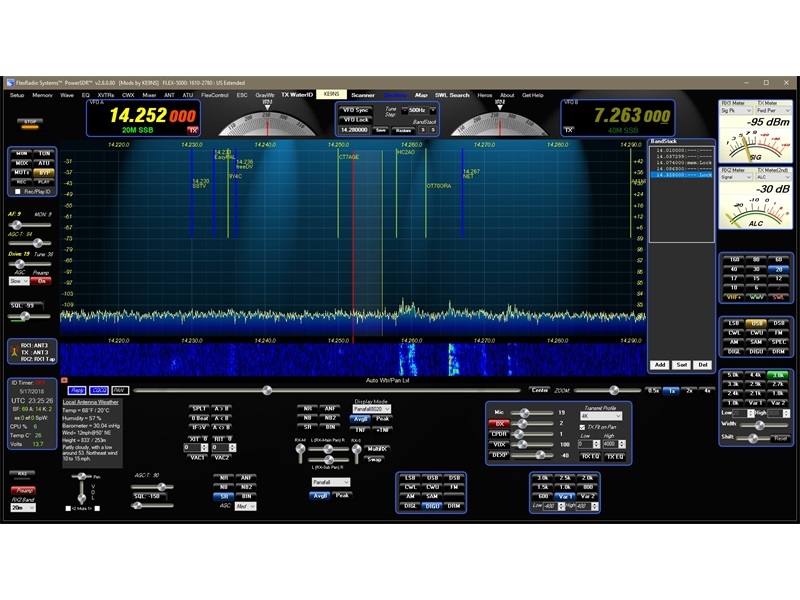
Key facts Frequency range from 20 Hz to 3/26.5/43/50 GHz. The AUTO TUNE function). The R&S®FSMR measurement. R&S®NRP-Z37 DC to 26.5 GHz –24 dBm to +26 dBm 3. Dbm Auto Tune Key Auto-tuned Singers Real Voices Live Indian Cooking Recipes Free Download Pdf Www Dev C Com Gta V Latest Version: Auto-Tune Pro 9.1.0.
- Cm Gm G A Em F Am C Dm Bb Fm Gbm Gb D E B Eb Ab Dbm Db Bbm Chords for Michael Jackson REAL VOICE WITHOUT AUTO-TUNE ♡ with song key, BPM, capo transposer, play along with guitar, piano, ukulele & mandolin.
- Auto-Key Auto-Key is an automatic key and scale detection plug-in, designed to enhance your Auto-Tune workflow and save valuable time in the studio. Choosing the correct key and scale for your music is an essential part of effective pitch correction, and Auto-Key makes this quick and easy.
The D-flat natural minor scale is:
Changes needed for the melodic and harmonic versions of the scale are written in with accidentals as necessary. The D-flat harmonic minor and melodic minor scales are:
D-flat minor is usually notated as the enharmonic key of C-sharp minor, as in the second and third measures of Amy Beach's Canticle of the Sun.[1] However, unusually, two of Verdi's most well-known operas, La traviata and Rigoletto, both end in D-flat minor (although written with the five-flat key signature of the parallel major). Mahler's thematic motif 'der kleine Appell' ('call to order') from his Fourth and Fifth Symphonies uses both notations: in his Symphony No. 4 (first movement) it is in D-flat minor, but in his Symphony No. 5 it is in C-sharp minor. In the Adagio of his Symphony No. 9 a solo bassoon interpolation following the main theme appears first in D-flat minor, returning twice more notated in C-sharp minor. Likewise, in the Adagio of Bruckner's Symphony No. 8, phrases that are tonally in D-flat minor are notated as C-sharp minor.[2][3][4][5]
References[edit]
- ^Amy Beach & Betty Buchanan (2006). The Canticle of the Sun. A-R Editions, Inc. p. xiii. ISBN0-89579-583-3.
- ^Ernst Levy (1985). A Theory of Harmony. SUNY Press. p. 62. ISBN0-87395-993-0.
- ^James L. Zychowicz (2005). 'Structural Considerations'. Mahler's Fourth Symphony. Oxford University Press. p. 28. ISBN0-19-816206-5.
- ^Eero Tarasti (1996). 'Music history revisited'. In Eero Tarasti; Paul Forsell; Richard Littlefield (eds.). Musical Semiotics in Growth. Indiana University Press. pp. 14–15. ISBN0-253-32949-3.
- ^Theodor W. Adorno (1992). Mahler: A Musical Physiognomy. Translated by Edmund Jephcott. University of Chicago Press. pp. 165–166. ISBN0-226-00769-3.
Scales and keys[edit]
Dbm Auto Tune Keyboard
Diatonicscales and keys | ||||||||||||||||||||||||||||||||||||||||||||||||||||||
|---|---|---|---|---|---|---|---|---|---|---|---|---|---|---|---|---|---|---|---|---|---|---|---|---|---|---|---|---|---|---|---|---|---|---|---|---|---|---|---|---|---|---|---|---|---|---|---|---|---|---|---|---|---|---|
| ||||||||||||||||||||||||||||||||||||||||||||||||||||||
| The table indicates the number of sharps or flats in each scale. Minor scales are written in lower case. | ||||||||||||||||||||||||||||||||||||||||||||||||||||||
Flow Process Training System

Key Features:
- Demonstrates automatic control of flow using proportional, proportional plus integral, and proportional, integral plus derivative (PID) control
- Uses industry-standard parts to make it ideal for industrial, vocational and academic training
- Demonstrates operation, calibration and tuning of controllers, transmitters, converters and valves
- Compact, mobile and fully self-contained
- Connects to the TE3300/02 Pressure Process and TE3300/04 Level Process Training Systems for cascade control
- Connects to the TE3300/06 Computer Control System for distributed control
- Safe, practical and realistic

Description:
- The Flow Process Training System is a compact and mobile unit for a wide range of experiments in flow control. It gives students a greater understanding of the stability of simple control systems.
- The main parts of the Flow Process Training System are:
- Industrial controller with auto-tune feature
- Two-channel chart recorder
- A gap-type (rotameter) fl ow meter
- Fixed orifi ce and pressure transmitter
- Pneumatic control valve
- Three-speed pump
- Reservoir
- To carry out experiments, students fill the reservoir with clean water and prime the system. They then set the controller to regulate the flow of the water using a pneumatic valve. The gap-type flow meter gives a visual indication of flow. The fixed orifice and pressure transmitter give feedback to the controller. For a realistic experience, the equipment has industrial-standard instrumentation and parts.
- The apparatus includes two gate valves. One valve controls the fl ow at the output (drain) and the other acts as a flow-bypass valve. A chart recorder shows and logs the changes of the process variable (level) and the controller output.
Learning Outcomes:
- Proportional, integral and derivative control
- Setting up and demonstrating automatic control
- The principles of loop control and the calibration and tuning of controllers, transmitters, converters and valves
- Calibration of an orifice flow meter with a differential pressure transmitter
- Quadratic flow laws and square root extraction
- Cascade control of pressure and flow, and level and fl ow (when used with the TE3300/02 and TE3300/04)
- Distributed control (when used with the TE3300/06 Computer Control System)
Specifications
Electrical supply:
- Single-phase 230 V at 0.3 A or 110 V at 0.6 A, 50/60 Hz (determined by order)
Dimensions and weight:
- 700 mm x 800 mm x 1750 and 120 kg
Dbm Auto Tune Keys
For details see the catalog below: